

Flat roofs are showing up more often on residential homes across San Diego—and not just for looks. For the right property, they offer practical advantages that go beyond design. But they also come with tradeoffs that homeowners need to understand upfront.
If you’re considering a flat roof installation, the decision comes down to how the system performs over time, not just how it looks on day one.
Why More Homeowners Are Choosing Residential Flat Roofing
Residential flat roofing has become more common for a few practical reasons. In Southern California, the climate plays a major role. There’s no snow load to manage, and modern flat roof systems are designed to handle constant sun and heat more effectively.
Flat roofs also make better use of space. They simplify solar panel installation, allow for rooftop equipment placement, and can even support usable outdoor areas. At the same time, Title 24 requirements push most installations toward reflective, energy-efficient materials, which helps reduce heat gain and cooling costs.
Flat Roof Pros and Cons: What to Know Before You Decide
Flat roofs aren’t better or worse than pitched roofs—they perform differently. The real question is how well the system is designed, installed, and maintained over time. Understanding where flat roof installation adds value, and where it requires more attention, helps you make a decision based on long-term performance, not just upfront cost or appearance.
Where Flat Roofs Deliver Real Value for Homeowners
A properly installed flat roof can be efficient, functional, and cost-effective.
Upfront, flat roof cost is often lower than a pitched system because it uses fewer materials and requires less structural complexity. Installation is typically faster, and access for future maintenance is easier.
Energy performance is another advantage. Systems like TPO reflect sunlight, which helps keep indoor temperatures more stable during hot months. Over time, that can reduce strain on your HVAC system.
Flat roof systems also give homeowners flexibility. Whether it’s solar, equipment placement, or future upgrades, you’re working with a surface that can support more than just basic coverage.
Where Flat Roofs Require More Planning and Maintenance
Flat roofs don’t fail because they’re flat—they fail when drainage and maintenance are overlooked.
Unlike pitched roofs, water doesn’t naturally run off. That means the entire system depends on proper slope, drainage design, and routine upkeep. Even small issues—like a clogged drain or a low spot—can lead to ponding water that slowly breaks down the membrane.
Seams, flashing, and penetrations are also critical. These are the areas where leaks typically start if the installation isn’t done correctly or small issues are ignored.
Maintenance isn’t complicated, but it is necessary. Regular inspections, clearing debris, and addressing minor wear early will make a significant difference in how long the roof lasts.
Flat Roof Pros and Cons at a Glance
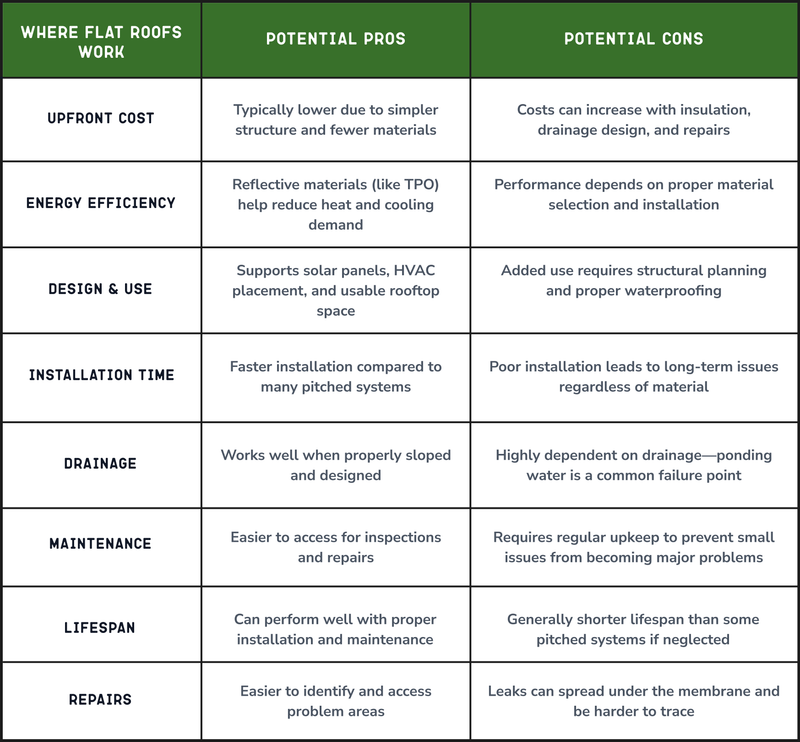
Comparing Flat Roof Systems: TPO, PVC, and More
Not all flat roof systems perform the same, and the material you choose has a direct impact on cost, lifespan, and maintenance.
TPO is one of the most common options for residential flat roofing because it balances durability, energy efficiency, and cost. It also aligns well with California’s Title 24 requirements due to its reflective surface.
PVC is more durable and performs better in areas with potential ponding, but it comes at a higher price point. Modified bitumen is often used for smaller sections or budget-driven projects, while built-up roofing is less common in newer residential installations.
The system matters, but installation matters just as much. Poor drainage or improper detailing will shorten the lifespan of any material.
What Impacts Flat Roof Cost and Long-Term Value
Flat roof cost depends on more than just the material you choose.
Labor, tear-off, and structural repairs can all shift pricing. In many cases, older roofs require wood repairs or deck work before installation can begin. Insulation is another major factor, especially in California, where Title 24 often requires upgraded R-values and continuous insulation above the deck.
These requirements increase upfront cost, but they also improve long-term performance. Reflective materials help reduce cooling demand, and proper insulation keeps indoor temperatures more stable.
Over time, the real cost of a flat roof comes down to maintenance and lifespan. A well-installed system that’s maintained regularly will last significantly longer than one that’s neglected.
Maintenance, Drainage, and What Causes Problems Over Time
Most flat roof issues trace back to a few predictable causes, and nearly all of them are preventable.
Clogged drains, debris buildup, and poor slope lead to ponding water, which is the most common source of damage. In a climate like San Diego, constant sun exposure also accelerates wear, especially if the roof isn’t inspected regularly.
Routine maintenance helps avoid these problems. Inspections twice a year, keeping the roof clear, and addressing small issues early can extend the life of the system and reduce the risk of major repairs.
Is a Flat Roof the Right Fit for Your Home?
Flat roofs work well when they’re designed and installed with the right approach. They offer flexibility, energy efficiency, and a clean, modern look—but they require attention to detail and ongoing care.
If you’re weighing your options, the best next step is to understand how your specific home, structure, and goals factor into the decision.
Schedule a free inspection with Casas Roof to get a clear, straightforward assessment and see whether a flat roof installation makes sense for your property.
Contact Us
Have questions or need a free estimate? Get in touch with our team today.